


Online training
Brow Lamination Including Shaping & Tinting
What is Brow Shaping and Tinting?
What is Brow Lamination?
Is the Treatment for Everyone?
Contraindications
Brow Hair Anatomy
Brow Shapes for Different Face Shapes
Measuring Tools and Techniques
Products Used
Eyebrow Shaping
The Treatment: Step by Step
Client Consultation and Record Keeping
Hygiene and Sanitation
Course Content
What is eyebrow shaping and tinting?
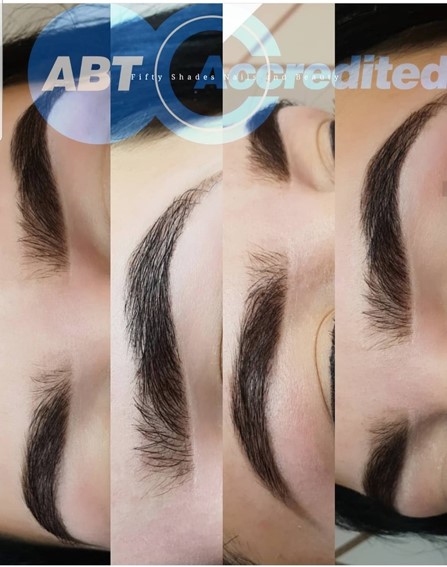
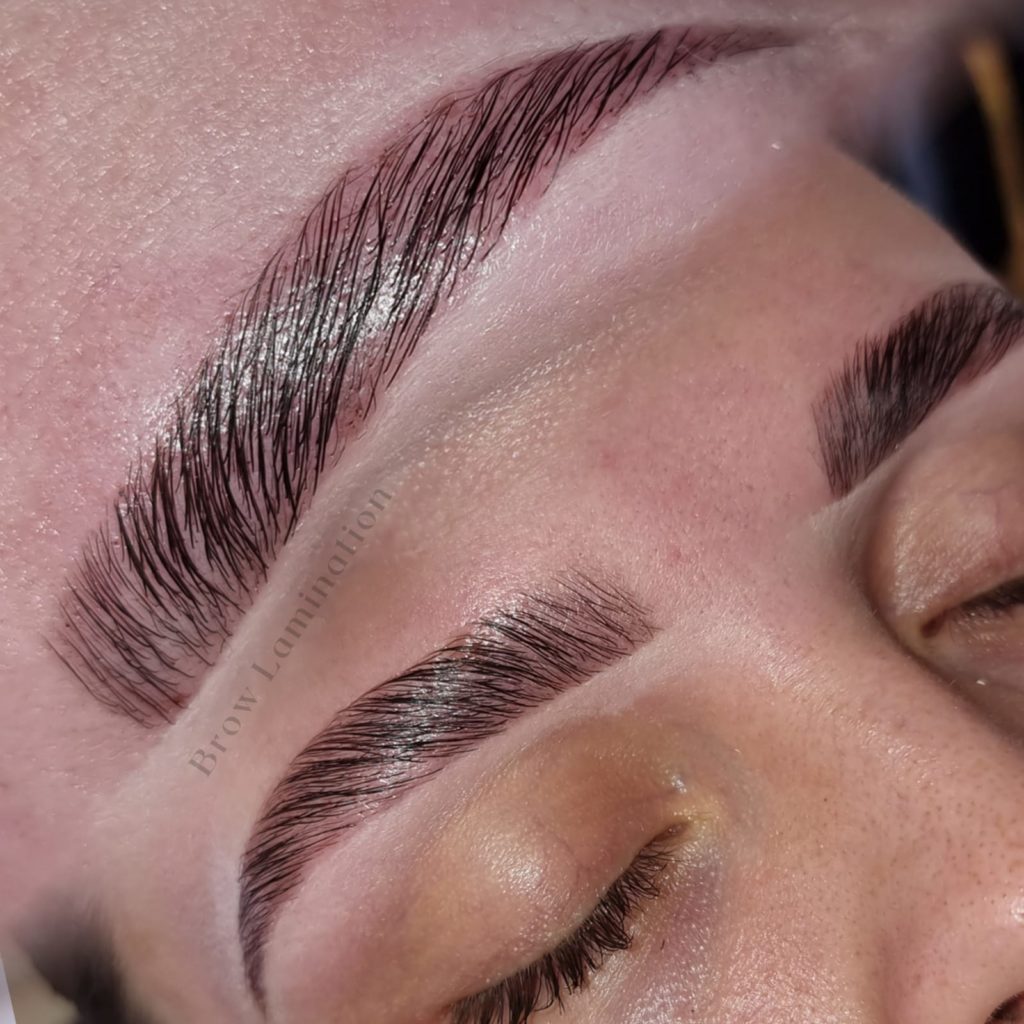
What is Brow Lamination? And is the treatment for everyone?
Contraindications
For us as beauty therapists it is important to understand when it is safe to perform the treatment and when it’s not. We are not doctors to diagnose, but we should always consult our client before the treatment and fill the consultation form to make sure there are no contraindications!
Local Contraindications:
We can’t perform the treatment to areas that has been:
- Cuts/Abrasions
- Scar tissue (6 months minor operation, 2 years major operation)
- Bruising/Swelling
- Sunburn
- Undiagnosed Lumps/Bumps
- Reaction to Patch Test
- Skin Condition around eye area (Eczema, Dermatitis, Psoriasis)
- Diabetic Retinopathy
- Alopecia
- Trichotillomania
- Hordeolum
- Hay Fever
- Blepharitis
- Alopecia
- Glaucoma
Total Contraindications: We can’t perform the treatment if the client has:
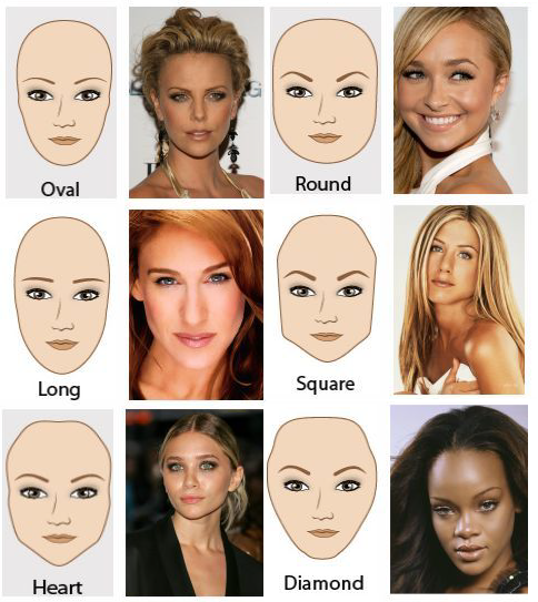
Different face shapes and recommendations
Oval Face Shape
Naturally arched eyebrow. Most of the brow shapes can suit this face shape as well.
Long Face Shape
We should avoid curved and arched eyebrows, which can make the face appear even longer.
Round Face Shape
Should avoid round brow shape. Naturally arched eyebrows.
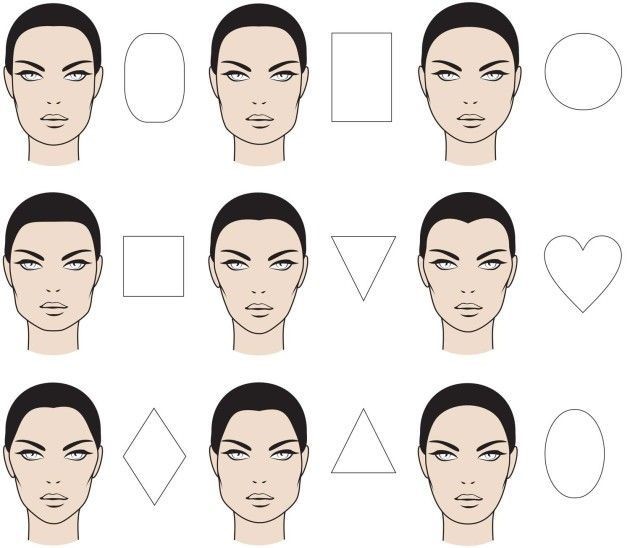
Square Face Shape
Arched eyebrows recommended for symmetry.
Heart Shape
Naturally arched eyebrow. Most of the brow shapes can suit this face shape as well.
Diamond Face Shape
Natural arched eyebrows. Brows should not be too far from each other.
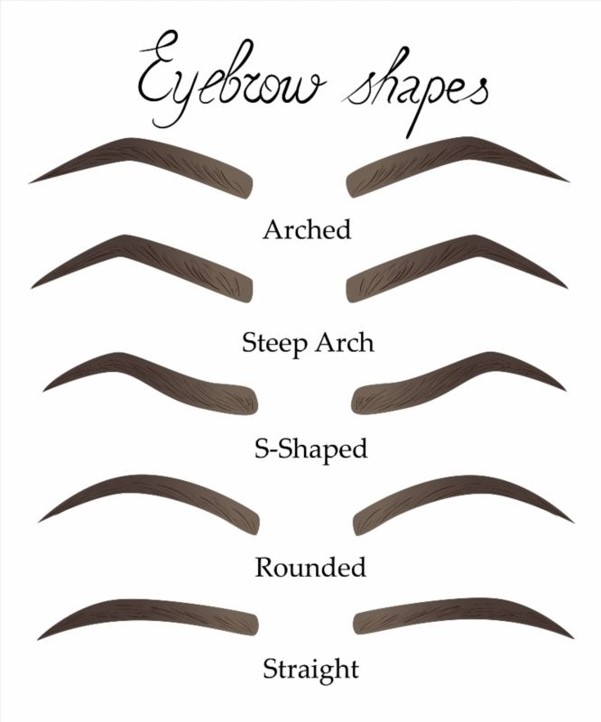
Eyebrow shapes
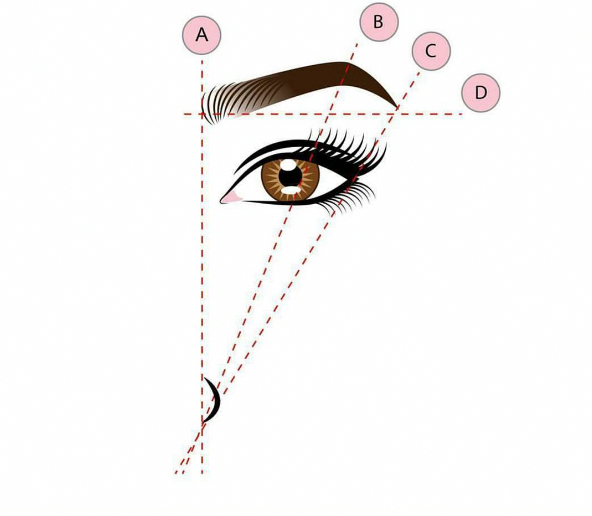
Brow shaping and measuring
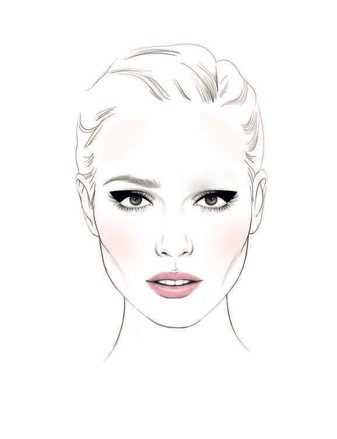
We measure the brow to create a perfect & even shape by using 4 steps:
- Inner Corners – Starting Point
- Arch – The highest point of the brow
- Length of the eyebrow
- Thickness of the eyebrow
Brow measurement
Repeat this
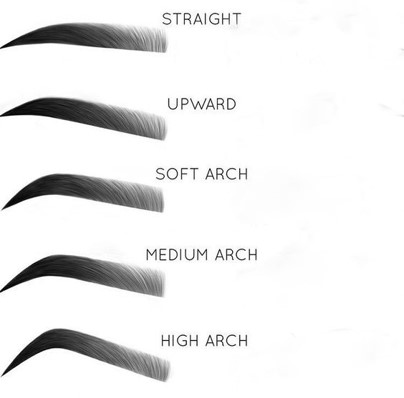
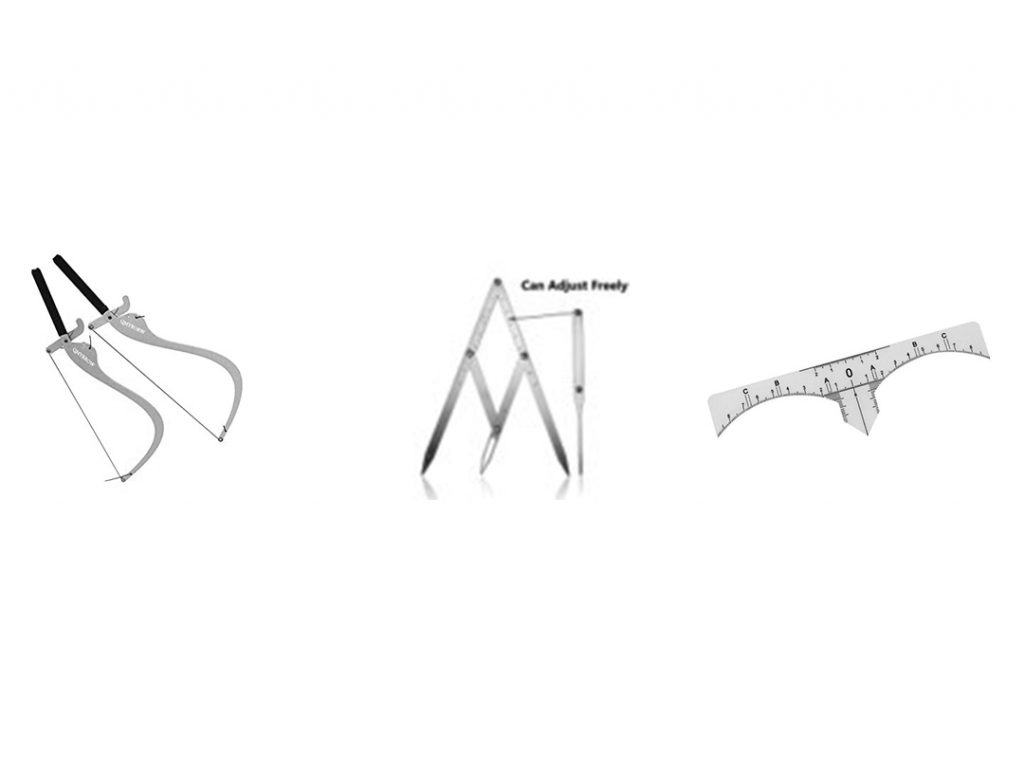
Measuring tools
Products used
- Hand Sanitizer used for sanitising your hands before the treatment.
- Eyebrow tint – tinting is the process of applying semi-permanent dye to enhance, shape, and define brows. The dye is left on for 5–15 minutes to attain optimal color, then any excess is removed with a damp cotton pad.
- Eyebrow tint developer is used to mix with eyebrow tint. You should always follow the instructions on what ratio to mix the tint and developer. Usually, it is 1cm tint : 10 drops developer.
- Tint remover is used to remove tint stains from the skin.
- Tweezers used to tweeze unwanted hair from the brow area.
- Pre-wax lotion is used to cleanse the brow before waxing the hairs.
- After-wax lotion is used to apply after waxing the brow area.
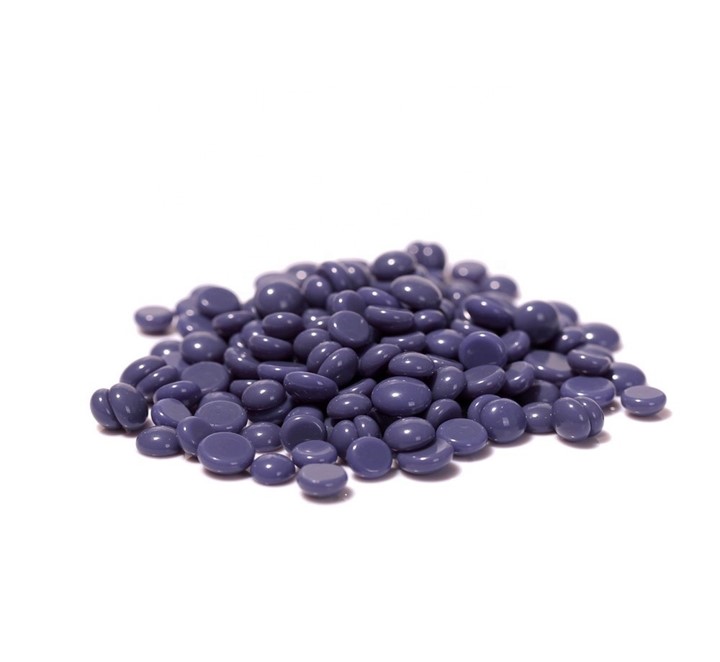
- Hot wax is used to remove small areas of unwanted brow hair.
- Wax heater
- Measuring tool used to measure the brow shape.
- Cotton pads
- Micro brushes to clean the tinting mistakes.
- Scissors used for brow trimming.
- Brush for applying brow tint.
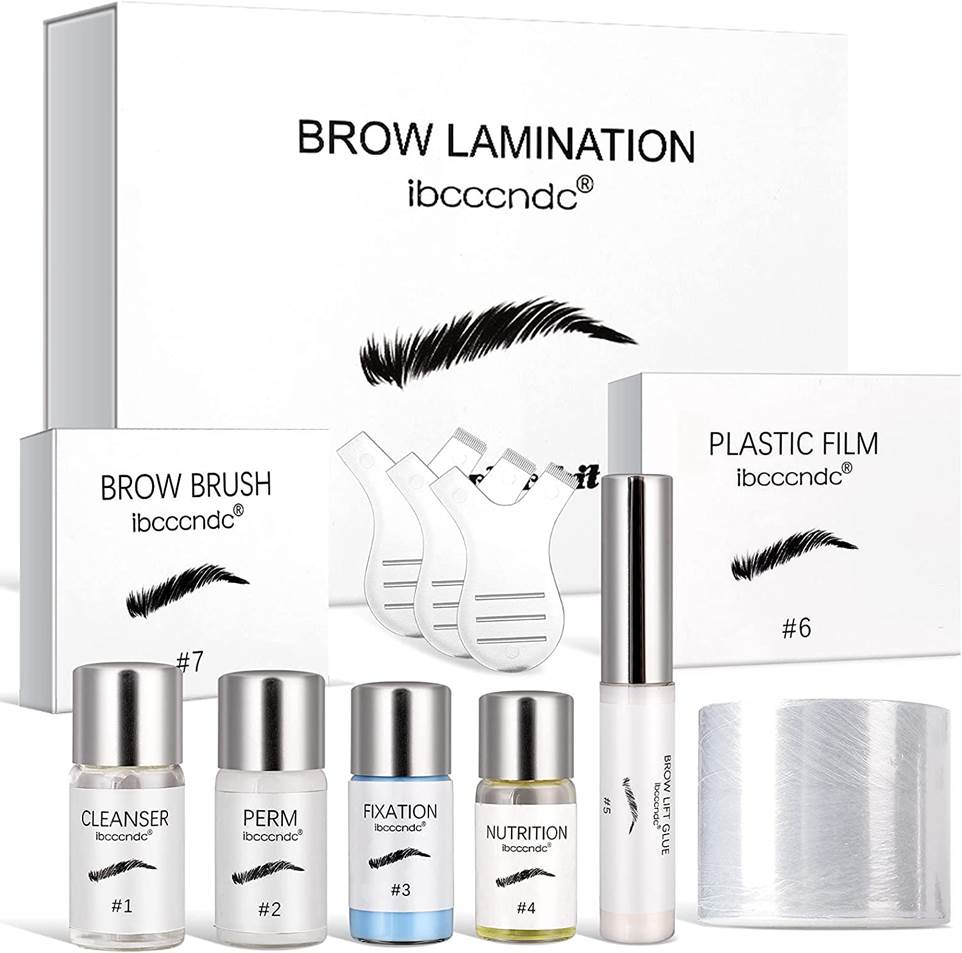
You will need
- Bonding Gel/Glue – used to brush and set brows in the desired direction.
- Cling film – to keep the heat in the product and brow hair in place.
- Lifting Balm – used to relax the brow hair.
- Fixer – used to fix and set brows in the new desired direction.
- Moisturising Serum – used to moisturise and hydrate eyebrows after the treatment.
- Cotton buds – to clean the product.
- Micro brushes – to apply the product.
- Lifting/Laminating tool – to set the brow hair in place.
- Cosmetic box – for keeping your tools and products.
Hot wax
Hot Wax vs. Warm Wax for Brow Waxing
Hot wax and warm wax both remove the hair from the root, but there are differences in how they are applied, the results they provide, and the types of hair each is used on. For brow waxing, we use peel-off hot wax, which has a great grip on brow hair and is proven to be less painful for the customer.
Application
Warmed to a slightly higher temperature, hot wax is a much thicker wax made up of plastics too, which allows it to set hard. It is applied to the skin, allowed to cool and set, and then pulled directly off without the use of a paper strip.
Areas
As it takes a moment for hot wax to cool and set, this kind of wax is usually used over smaller areas for more efficient treatment times. Areas on the face, like the upper lip, as well as the pubic area, are most commonly treated with hot wax.
Hair Types
Because hot wax sets around each of the hairs, it makes for a better grip and removal of thicker hairs that may be too stubborn to remove with warm wax.
The Treatment (Step by step)
Personal Protective Equipment PPE
Protective Measures
Wearing gloves protects you from:
- Fine dust particles
- Excess liquid
- Bacteria
Any types of gloves can be used but always remember to read your client’s consultation sheet to be sure they are not allergic to latex, vinyl, or nitrile. Nitrile are the strongest and most durable of these gloves.
Eye Wear
Eye wear, such as safety glasses, can be worn during eyelash extension treatment.
Dust Masks
Dust masks protect against dusts encountered during cleaning activities in the salon. Small particles can stay airborne for as long as 40 minutes. Dust masks prevent irritation of the eyes, skin, and respiratory tract. They also minimize germs that can be spread in the salon from client to professional. Dust masks are required for many professionals.
Sanitising procedure
Sanitising is the lowest level of decontamination or cleaning. It is done by wiping, washing, sweeping, or dusting to reduce the amount of germs and bacteria on tools and surfaces. Before disinfection or sterilisation, it is essential to first sanitise tools, surfaces, and equipment by the appropriate method.
Sanitised tools and surfaces will still have pathogens or other organisms on them. Washing your hands is a form of sanitising. You may think that if you wash your hands with soap and hot water, they are clean. Indeed, they are ‘clean,’ but they will probably still have micro-organisms on them either from the tap or the towel that you dried them on. To remove such organisms, you would have to go to the next level of decontamination. Having said that, hand-washing is one of the most important actions which anyone can take to prevent getting infected themselves and from causing infection in others. But beware! You should avoid the use of bar soaps in the salon as bacteria can even grow on these! It is safer to use liquid soap, which comes in a pump-action bottle.
When we sanitise our skin, we use an antiseptic. An antiseptic is a chemical that inhibits the growth of bacteria. It is a mild form of sanitiser which is used to cleanse the skin before carrying out a treatment. They come in the form of crystals, liquids, sticks, and powders, for example, boric acid (2-5%), hydrogen peroxide (3-5%), and commercial liquid sanitising soap.
Disinfection is the next level of decontamination. This is a chemical process that will kill most of the germs if correctly carried out but will not necessarily kill them all. A good quality disinfectant will be effective and fast-acting against most pathogenic bacteria. It is the most used form of decontamination in the salon.
The most commonly used disinfectants are: sodium hypochlorite; alcohol; quaternary ammonium compounds (QUATS), for example, Savlon; pseudomonacidal; phenols and cresols, for example, Dettol, and commercially prepared products. Don’t worry about the long terms, try to remember the commercial names.
Using disinfectants are chemicals which destroy most (not all) bacteria and some viruses. Surfaces, trolleys, and equipment should always be wiped over with a disinfectant solution; this reduces the growth of germs and bacteria present. Any item which is used on a client should be disinfected after use or thrown away (if it is disposable). Items which cannot be disinfected – such as eye pads, brushes, micro brushes.
Disinfecting Tools and Equipment
Most tools such as tweezers and equipment you use in the salon can be disinfected. An effective disinfectant should have the following characteristics:
- Convenient to prepare
- Quick acting
- Preferably odourless
- Non-corrosive
- Non-irritating to the skin
Disinfecting metal tools
All metal tools (tweezers) should be disinfected after use on each and every client.
The most commonly used disinfectant in the salons is Barbacide solution.
Remember, sterilisation should follow after disinfection every time.
Client consultation & record keeping
Client Consultation
Your treatment plan should cover the following:
- Explaining: what is involved in the application
- How long it will take
- Expected treatment benefits and outcomes
- Relevant home care advice requirements
Post Treatment
When you have completed the treatment, you should inquire from your client if he/she is satisfied.
You should record:
- The outcome of the treatment
- What future treatments you recommended
- The products you used and those recommended for home care
Consultation forms for example purposes only
Record keeping
Record keeping is very important in the salon when providing treatments to clients. Not to mention legal implications, you will have a clear view of your client’s health conditions that might be related to your treatment. You can also track any changes in your client’s hands or toes. Most insurance companies will ask you to keep records. 7 years is the optimal time to keep these records; please always make sure to check this with your insurance company.
This training program is fully accredited with ABT Ireland – Associated Beauty Therapists. This is one of the biggest and most well-known insurance companies in Ireland for beauty professionals. You can receive a 10% discount on insurance after completing this course with the code Fifty88.
Home studies to complete the training
Home Study Completion Requirements
To complete this course, you will have to present 2 home studies to this platform, which will be assessed by our trainers. You will receive score sheets and feedback. Scores range from 0 to 100:- 0 – 55: Not passed. This means you will have to complete more home studies.
- 55 – 100: Passed. Congratulations! You have passed this training program and your certificate is on the way!
The assessment for your home case studies might take up to 5 working days.
After your assessment is completed, please allow up to 5 working days for your certificate to be issued and sent to you digitally via email.
If you require a printed (physical) certificate, this can be arranged for an additional fee of €10.
If you purchase the training with the kit we will post out your kit within 7 working days.
Home Study Requirements
- 2 Eyebrow lamination treatments to be completed, including all steps.
- Every step or process should be recorded in video format and sent to whatsapp:+353830364447
- There is no need to comment on the steps or upload the video with sound.
- The recording should be clear, bright, and each step should be fully visible for us to assess.
Best of luck, can’t wait to hear from you soon and see the results!
Take your time – the treatment might take an hour or longer, which is completely normal at the beginning!